How Do Bottom Loading Water Dispensers Work?
A bottom loading water dispenser works by pulling water up from a bottle stored in its base cabinet. A pump moves the water to the hot and cold tanks, so you never lift a heavy jug onto the top.
On this page (11 sections)
- How do bottom loading water dispensers work step by step?
- What does the pump do inside a bottom loading water dispenser?
- How do the hot and cold tanks fill from the bottle?
- Why does the bottle sit in the cabinet instead of on top?
- How do you change the bottle on a bottom loader?
- What does the empty bottle alert do?
- What kind of bottle fits a bottom loading dispenser?
- How do you keep a bottom loading dispenser clean?
- Are bottom loading water dispensers worth it?
- What should you know before you buy one?
- How do bottom loading water dispensers work, in one answer?
A bottom loading water dispenser works by pulling water up from a bottle stored in its base cabinet. A pump moves the water to the hot and cold tanks, so you never lift a heavy jug onto the top.
That one change is why these coolers are easier on your back. You slide or set the bottle into the bottom, then the machine handles the rest.
The rest of this guide explains the pump, the tanks, the taps and the care that keeps it all running.
How do bottom loading water dispensers work step by step?
Water starts in the bottle inside the cabinet, then a pump sends it up to the tanks. When you press a tap, water flows from the right tank out to your cup.
Here is the basic path:
- You load a full bottle into the bottom cabinet.
- A probe or intake line reaches into the bottle.
- The pump draws water up into the reservoirs.
- One reservoir heats water and another chills it.
- The taps release water from those tanks.
The pump only runs when the tanks need refilling. That is why a bottom loader can sit quiet for a while and then start up again.
Because the bottle stays low, the machine cannot rely on gravity the way a top loader does. The pump does the lifting, and the internal plumbing does the rest.
What does the pump do inside a bottom loading water dispenser?
The pump is the part that makes a bottom load design possible. It pulls water upward from the bottle and pushes it into the tanks, against the pull of gravity.
On a top loader, water simply falls from the bottle into the reservoirs. A bottom loader has to work harder, so the pump has to be reliable and quiet.
It usually sits between the bottle compartment and the tanks.
The pump runs on the same corded electric supply that heats and chills the water. That means the whole unit needs an outlet nearby.
If the power is off, the pump stops, and the taps have only what is already in the tanks.
How do the hot and cold tanks fill from the bottle?
The tanks fill as water is used, so they stay close to full while the bottle has water in it. The pump tops them up on demand rather than in one long run.
Cold water sits in an insulated tank cooled by a compressor or a thermoelectric unit. Hot water sits in a separate tank with a heating element.
Each tank has its own temperature target, and the unit switches the pump, heater and chiller on as needed.
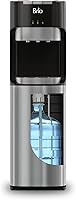
This tank setup is why a 3 temperature model like the Brio can offer hot, room temperature and cold water. The third setting usually draws straight from a tank at room temperature instead of being heated or chilled.
Why does the bottle sit in the cabinet instead of on top?
The bottle sits low so you can load it without lifting it overhead. That design choice is the whole point of a bottom loader.
With a top loader, you raise a full 5 gallon jug, which weighs about 40 lb, to shoulder height and flip it onto a probe. That is the move most people dread.
A bottom loader removes it. You set the bottle down into a cabinet or slide it in on a track, then close the door.
The trade-off is the pump and the extra plumbing. That is also why bottom loaders tend to cost more than basic top loaders.
You pay for the pump and the easier bottle change.
If you want the pump design plus a cleaning routine built in, see our guide to bottom loading water dispenser self cleaning.
How do you change the bottle on a bottom loader?
You open the cabinet, pull out the empty bottle, and slide the full one into place. Then you close the door and let the pump take over.
The exact steps depend on the model. Some cabinets have a shelf or tray that slides out so you can set the bottle down without bending.
Others expect you to tip the bottle in and seat it on the intake.
Either way, you are handling the jug at floor level. A handle helps if the bottle is heavy or your grip is weak.
The Gofriipai 2-pack fits standard 5 gallon jugs and offers a single-person grip or a two-person lift.
Our full walkthrough on how to change water bottle on dispenser covers seating the bottle and restarting the pump safely.
What does the empty bottle alert do?
The empty bottle alert tells you the cabinet jug is running low before the taps go dry. It saves you from discovering the problem when you are already holding a cup.
Brio says its LED display includes an empty bottle alert. The unit tracks how much water it has drawn from the bottle and warns you when a refill is due.
You then swap the jug on your own schedule rather than waiting for a sputtering tap.
An alert does not pump water on its own. It is a reminder, so plan the change when you have a full bottle ready.
Keeping a spare jug on hand makes the swap quick.
What kind of bottle fits a bottom loading dispenser?
A bottom loader takes a standard 3 or 5 gallon jug, and some models accept both. Brio says its cabinet fits either size and accommodates both.
Most standard 5 gallon bottles are the wide-mouth polycarbonate or PET jugs you exchange at a store. The cabinet opening and the intake fitting have to match, so check the model before you buy.
The Brio unit measures 15.6 inches deep by 12.2 inches wide by 41.4 inches tall. That footprint matters in a tight kitchen, since the cabinet door needs room to swing open.
How do you keep a bottom loading dispenser clean?
Clean the cabinet and the internal tanks on a schedule, because water sits in them between uses. A pump system has more hidden surfaces than a simple top loader.
Start with the bottle compartment. Wipe it out when you change the jug and look for spills or dust.
Then follow the unit's care guide for flushing the tanks and lines.
A dedicated cleaner like the IMPRESA solution is made for top and bottom loading coolers. IMPRESA says it removes build-up without harming the appliance and leaves no residue.
Each pack has two 8 ounce bottles.
The Brio care guide covers its own cleaning steps, so follow that first. Our cleaning and everyday use posts in the category can help you plan a routine.
Are bottom loading water dispensers worth it?
They are worth it if lifting a full jug onto the top is hard for you. The pump and cabinet make bottle changes easy, and the trade-off is a higher price and one more part that can fail.
The Brio model shows what you get for the extra cost. It has a 3 temperature setup, a child safety lock on the hot spout, smart technology and a stainless steel accent.
It runs on corded electric power and heats water up to 198°F.
If you are still deciding between the two styles, read are bottom loading water coolers good for the full pros and cons. And if you want the third room temperature option spelled out, see our picks for a bottom load water dispenser 3 temperature.
What should you know before you buy one?
Check the cabinet size, the bottle size it accepts and the power outlet first. Those three details decide whether a bottom loader fits your kitchen and your refill routine.
Then think about the features you will actually use. A child safety lock matters in a home with small children.
An empty bottle alert saves guesswork. A room temperature spout helps if you fill pitchers and pet bowls as well as cups.
Also plan for cleaning. Buy a cleaner made for coolers and set a reminder to flush the tanks.
The pump will keep drawing water as long as you keep it clean and supplied.
How do bottom loading water dispensers work, in one answer?
A bottom loading water dispenser works by pumping water from a jug in its base cabinet up to heated and chilled tanks. You press a tap and the water comes out, without any overhead lifting.
Pick a bottom loader if easy bottle changes matter most to you. The Brio unit is a solid fit for most homes, with 3 temperatures, a hot water safety lock and an empty bottle alert.
Add a handle for the jugs and a cooler cleaner for the tanks, and the routine stays simple.
Frequently asked questions
How does a bottom loading water dispenser move water to the taps?
An internal pump draws water from the bottle in the cabinet and pushes it up into the hot and cold reservoirs. The taps release water from those tanks, so gravity never has to carry the water down from a bottle on top.
How do you know when the bottle needs changing?
Many models include an empty bottle alert that signals when the cabinet jug is low. Brio says its LED display shows an empty bottle alert, so you get a prompt instead of a dry tap.
Can you use a 3 gallon bottle instead of a 5 gallon one?
Some units fit both sizes. Brio says its cabinet takes either a 3 or 5 gallon jug, so you can choose the size that suits your refill routine.
Always confirm the fit for the model you buy.