Are Bottom-Loading Water Coolers Good?
Bottom-loading water coolers are good if you want to avoid lifting and flipping a heavy jug. They need floor space and power, and the pump adds a part that can need attention.
On this page (8 sections)
- Are bottom-loading water coolers good for home use?
- What are the main advantages?
- What are the disadvantages?
- Is a bottom-loading cooler better than a top-loading one?
- How much space and power do they need?
- Are they easy to maintain?
- Who benefits most from a bottom-loading cooler?
- Are bottom-loading water coolers good for you?
Bottom-loading water coolers are good if you want to avoid lifting and flipping a heavy water jug. They take floor space, need power, and use a pump to move water from the lower cabinet.
The main benefit is easier bottle changes. The main trade-off is adding a pump and electrical parts, so consider how the cooler fits your space and routine before choosing one.
Are bottom-loading water coolers good for home use?
Yes, a bottom-loading cooler can suit home use when easy bottle changes matter more than a compact countertop setup. These freestanding models keep a 3- or 5-gallon jug in a lower cabinet, which means you don't have to lift it onto the top of the cooler.
Check the full height and width, then choose a spot near an outlet with room to open the cabinet. For a broader overview of how these machines work, see our plain guide to bottom-load water coolers.
A bottom-loading design doesn't make the jug lighter. You'll still need to carry it to the cooler and slide it into the cabinet, so plan for that movement when ordering or refilling water.
What are the main advantages?
The biggest advantage is that the jug sits low, making replacement easier to manage. A bottom-load cooler can also keep the bottle out of sight and offer hot, cold, or room-temperature water, depending on the model.
Avoiding an overhead lift may be helpful if you're concerned about handling a full jug. Some models have an empty-bottle alert, which can give you a reminder before the cooler runs dry.
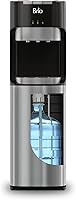
This Brio model pairs a lower bottle cabinet with three temperature options. Its two-step hot-water lock and empty-bottle alert may be useful in a household where more than one person uses the cooler.
The convenience is mostly about bottle position and access to water. A bottom-load cabinet won't remove the need to lift the jug into place or keep the cooler clean.
What are the disadvantages?
A bottom-loading cooler needs floor space, an outlet, and a pump that moves water from the jug. The pump adds a mechanical part, and the cooler can't work as intended if the bottle isn't connected or the pump isn't drawing water.
The lower cabinet can also make bottle changes feel less straightforward if you have limited room to pull the jug out. Measure the cooler and leave enough clearance to open the door fully.
Electric heating and cooling use power. If energy use matters to you, compare the features you plan to use and read our guide to what affects water cooler power consumption.
Is a bottom-loading cooler better than a top-loading one?
Bottom-load models are easier for changing bottles, while top-load models let you see the jug and don't use a pump to draw water upward. Neither design is better for every household.
Choose bottom load if lifting a full jug to shoulder height is inconvenient or you want the bottle hidden. Choose top load if you prefer to see the water level or want a simpler design.
For a closer look at the differences, read top load vs. bottom load water coolers. Include bottle handling, floor space, and maintenance in your decision.
Who should choose the Avalon A4?
Choose the Avalon A4 if you want three water temperatures and a nightlight in a bottom-loading cooler. It accepts 3- to 5-gallon bottles and has an empty-bottle indicator.
The model has a stainless steel cabinet and a BioGuard coating on high-contact areas. Avalon describes that coating as a way to help prevent bacteria growth; it doesn't replace routine cleaning.
Skip it if you need a compact countertop dispenser or don't want a cooler with hot-water access. For a broader comparison of models, see our best bottom-load water coolers for home.
How much space and power do they need?
Measure the cooler's footprint and height, and plan for a nearby outlet. Bottom-loading models are freestanding, so they need a clear floor spot and enough space to open the bottle cabinet.
The Brio measures 15.6 in deep, 12.2 in wide, and 41.4 in high. The Avalon A4 measures 12 in deep, 13 in wide, and 41 in high, while the Primo is 14.2 in deep, 12.2 in wide, and 40.9 in high.
These measurements don't include extra room to open the cabinet or reach the controls. Check your intended spot before choosing a model, especially if it will sit beside a counter or wall.
Are they easy to maintain?
They still need regular cleaning, just like other water coolers. Follow the care instructions for the model, and clean the dispensing area and bottle compartment as directed.
A bottom-load setup can hide the jug, but it doesn't prevent dust, spills, or residue around the cooler. Our guide explains how to clean a bottom-load water cooler at home.
Who should choose the Primo?
Choose the Primo if two temperatures are enough and you want push-button controls. It dispenses hot and cold water, has a two-step hot-water lock, and includes a removable drip tray described as dishwasher-safe.
The Primo's lower cabinet avoids the overhead lift, and its nightlight illuminates the spouts. It doesn't offer room-temperature water, so choose a three-temperature model if that setting is important to you.
Who benefits most from a bottom-loading cooler?
People who want easier bottle changes are the clearest fit. A bottom-load model can also suit a shared kitchen or office where several people use hot and cold water throughout the day.
It's less appealing if you have little floor space, no convenient outlet, or prefer to avoid pumps and electrical controls. A smaller manual dispenser may suit occasional use better.
If you choose a bottom-load model, make sure its bottle size, temperature settings, and cabinet dimensions match your needs. For help with the refill itself, read how to change the bottle on a bottom-load dispenser.
Are bottom-loading water coolers good for you?
Choose one if avoiding the overhead jug lift is worth the floor space, power use, and pump. A top-load cooler may be a better fit if you want to see the bottle level or prefer a simpler setup.
Pick the Brio or Avalon if you want room-temperature water along with hot and cold. Pick the Primo if hot and cold are enough.
Compare more options in our best bottom-load water coolers guide.
Frequently asked questions
Are bottom-loading water coolers worth it?
They can be worth it if avoiding the lift and flip of a full jug matters to you. You still need room for a freestanding unit, an outlet, and a routine for changing and cleaning the bottle area.
Compare those needs with how often you use hot or cold water.
What is the downside of a bottom-loading water cooler?
A bottom-loading cooler uses a pump to move water from the jug to the reservoir, so it has a mechanical part that can need attention. You also need floor space and a power outlet, and some models make room only for certain jug sizes.
Are bottom-load water coolers better than top-load?
Bottom-load models are easier to refill because the jug sits in a lower cabinet. Top-load models let you see the bottle and avoid a pump, but you must lift and turn the jug into place.
The better choice depends on which trade-off matters more in your home.
Do bottom-loading water coolers need to be plugged in?
Most electric bottom-loading coolers need power for cooling, heating, and the pump. Check the model's power needs and place it near a suitable outlet, with enough room to load the bottle and follow its care instructions.