Water Cooler Power Consumption: What Affects It
Water cooler power consumption depends mainly on how often it heats and cools water, not just its wattage rating. Hot-water use, room temperature, ventilation, and energy-saving settings can all affect electricity use.
On this page (8 sections)
- What affects water cooler power consumption most?
- Does the wattage tell you how much electricity it uses?
- Do hot and cold settings use power differently?
- How do room conditions change energy use?
- Can you reduce water cooler electricity use?
- Which water coolers have wattage details to compare?
- What should you compare before choosing a cooler?
- How do you decide if your cooler is using too much power?
Water cooler power consumption depends mainly on how often the appliance heats and cools water, not just the wattage printed on its label. Hot-water demand, room temperature, airflow around the cooler, and its controls all affect how much electricity it uses over time.
Wattage is a useful comparison point, but it isn't a daily or monthly energy total. A cooler draws power while heating or cooling, then cycles to maintain its temperatures.
What affects water cooler power consumption most?
Heating and cooling cycles are the main drivers of water cooler electricity use. A higher wattage describes the rate of power draw while a component is running, while energy use also depends on how long and how often it runs.
A model with hot, cold, and room-temperature settings may operate both a heater and a cooling system. The room-temperature tap itself doesn't need to change the water's temperature, but the appliance may still maintain its hot and cold tanks.
More frequent hot-water draws can trigger more reheating. Repeated cold-water draws, a warm room, or poor airflow around the cabinet can also make cooling run more often.
Does the wattage tell you how much electricity it uses?
No. Wattage is a power rating, not a measurement of energy used over a day.
A 500-watt component running for a short period may use less energy than a lower-wattage component running for many hours.
Energy is commonly measured in kilowatt-hours (kWh). To estimate it from actual usage, a plug-in energy monitor can track a compatible appliance over a representative period; follow the monitor and cooler manuals, and don't use a monitor that isn't rated for the appliance's load.
The listed wattage can still help compare models, but compare like with like. Heating wattage, cooling wattage, and total appliance wattage may refer to different things, so check what each figure describes.
How do you calculate a rough energy estimate?
Multiply kilowatts by operating hours to estimate kilowatt-hours. For example, a 500-watt heater running for 1 hour uses 0.5 kWh during that hour.
That example does not mean the heater runs continuously for an hour every day. A cooler cycles on and off, so actual energy use depends on its operating time and your water use.
For a household estimate, measure the cooler across several typical days, including your usual hot and cold draws. A single brief reading may miss a heating or cooling cycle.
Do hot and cold settings use power differently?
Hot and cold functions use power to keep water near their target temperatures. Heating often has a higher wattage rating than cooling, but total energy depends on how long each system runs.
Some models let you switch heating or cooling off separately; others may require a different process. Follow the manual before changing a setting, and make sure the cooler has water flowing as instructed before enabling the heater.
If you rarely need hot water, disabling that function when the manual permits can reduce unnecessary reheating. For a cooler with a heating fault, start with our guide to hot water that isn't working.
How do room conditions change energy use?
A cooler may run more often in a warm, cramped, or poorly ventilated spot. Heat from nearby appliances and blocked airflow can make it harder for the cooling system to remove heat.
Leave the clearance recommended in the manual, and keep vents clear of walls, curtains, and stored items. Avoid placing the cooler beside an oven, radiator, or sunny window if you have another suitable location.
Water temperature and the number of draws also matter. Frequent use can bring more room-temperature water into the tanks, which the cooler may then need to heat or cool.
Can you reduce water cooler electricity use?
Use only the temperature functions you need and give the cooler room to ventilate. Small changes to hot-water use and placement can reduce avoidable cycles.
- Turn off a heating or cooling function when the manual allows it and you don't need it.
- Keep the cooler away from direct heat and leave its required ventilation space open.
- Avoid repeated hot-water draws if you only need room-temperature water.
- Check door or cabinet panels and controls after moving the unit, so settings are not left on accidentally.
Don't unplug and restart a cooler in a way that conflicts with its instructions. If cooling performance changes, see what to check when a water cooler isn't cooling.
Which water coolers have wattage details to compare?
Compare the stated wattage alongside the functions you actually use. The figures below can help frame that comparison, but wattage alone doesn't predict household energy use.
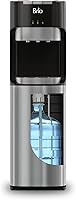
The Brio 130 lists 300 watts and offers hot, room-temperature, and cold dispensing. It may suit a home that wants three temperature choices in a bottom-load design.
The Avalon A3BLK lists 520 watts, has three temperature settings, and includes a self-cleaning feature. Check how its controls work if you plan to turn heating or cooling off at certain times.
The Euhomy lists 550 watts overall, with 430 watts for heating and 80 watts for cooling. Those component figures help distinguish its heater and cooling system, but they still don't say how long either one runs.
What should you compare before choosing a cooler?
Look at the wattage figures, temperature controls, and your typical use together. A high heater rating may matter less if you rarely use hot water, while frequent cold-water draws make cooling performance more relevant.
Check whether the maker gives separate heater and cooler ratings, or only one overall figure. Look for instructions on switching modes and placement, since those affect how you can manage use at home.
For a shared workspace with frequent draws, compare capacity and everyday setup needs in our guide to water coolers for a small office. For longer-term operating concerns, see how long water coolers last.
How do you decide if your cooler is using too much power?
Measure its use over several normal days before assuming there's a fault. Compare the result with your own past readings, and note changes in room temperature, usage, and settings.
A cooler that runs constantly, loses cooling ability, or behaves differently from its manual may need troubleshooting. Check that vents are clear and settings are correct; if it still won't cool, use the steps in water cooler not cooling water.
For a practical choice, compare wattage and temperature controls, then focus on how often you need each function. Pick the model whose settings match your routine, and use an energy monitor if you need a measured estimate of its electricity use.
Frequently asked questions
How much electricity does a water cooler use?
It depends on the model, its heating and cooling cycles, room conditions, and how often you draw hot or cold water. A wattage label shows a power rating, not a fixed amount of energy used each day.
For a useful estimate, measure actual use with a suitable plug-in energy monitor.
Does a water cooler use more electricity when heating water?
Heating water can draw substantial power while the heater runs, but the label's wattage alone doesn't show how long it runs. A cooler that reheats often may use more energy than one with less hot-water demand.
Check whether the model offers separate hot-water controls or an energy-saving mode.
Should I turn off my water cooler at night?
You can switch off heating or cooling if your model allows it and you don't need those functions overnight. Follow the manual, especially before restarting heating, and don't leave water sitting in a way the manufacturer advises against.
A timer or energy-saving setting may be more convenient than unplugging it daily.
Does a bottom-load water cooler use more power?
Bottom loading describes where the bottle sits, not how much electricity the cooler uses. Power use depends more on the heating and cooling system, its controls, and operating conditions.
Compare wattage and energy features across models, then consider how often your household needs hot and cold water.