Water Cooler Types Explained
There are three main types of water coolers: top load, bottom load and bottleless. Top loaders are the cheapest and simplest, bottom loaders remove the heavy lifting, and bottleless models filter tap water so you never buy a jug.
On this page (9 sections)
- What Are the Main Types of Water Coolers?
- How Does a Top Load Water Cooler Work?
- How Does a Bottom Load Water Cooler Work?
- How Does a Bottleless Water Cooler Work?
- Which Water Cooler Type Fits Your Space?
- How Much Lifting Does Each Type Require?
- What Does Each Type Cost to Run?
- Which Type Is Easiest to Clean?
- Which Water Cooler Type Should You Pick?
The main types of water coolers are top load, bottom load and bottleless, and each one changes how much lifting you do and how much space you give up. Top loaders seat a jug on top of the unit.
Bottom loaders hide the jug in a cabinet at floor level. Bottleless dispensers connect to a water line and filter tap water on demand.
Your choice comes down to three things: who lifts the jug, how much floor space you have, and whether you want to keep buying bottled water. This guide walks through each type, the trade-offs from the specs, and who each one suits.
If you want the short version first, a bottom loader is the best pick for most households because it removes the heavy lifting without needing plumbing. A bottleless unit wins when a water line is already nearby.
A top loader is the budget choice when lifting is not a problem.
Our picks at a glance
-
1

-
2

-
3

What Are the Main Types of Water Coolers?
The three types of water coolers are top load, bottom load and bottleless, and they differ in where the water comes from and how it gets into the machine. That single difference drives almost everything else: the footprint, the lifting, the cleaning and the running cost.
Here is how each type works in plain terms.
- Top load: you lift a 3 or 5-gallon jug and flip it onto a collar at the top. The water flows down into the reservoir by gravity. These are the most common and usually the cheapest to buy.
- Bottom load: the jug sits in a cabinet at the bottom. A pump pulls water up into the tank. You slide the bottle in rather than lifting it overhead.
- Bottleless: the unit connects to your home water line. Water passes through a filter and then into hot or cold tanks. There is no jug at all.
Each type still dispenses hot, cold or room-temperature water, and most include a child safety lock on the hot tap. The differences show up in daily use, not in the pour.
Your cleaning routine matters too. A jug-based cooler has a reservoir and a bottle collar to sanitize, while a bottleless unit adds filters and sometimes a UV self-clean cycle.
Our guide to how often should water coolers be cleaned covers the timing for each type.
Rule: if you cannot describe who will lift the jug and where the cooler will stand, decide those two things before comparing models.
How Does a Top Load Water Cooler Work?
A top load water cooler is the simplest design: a full jug sits upside down on top and feeds the tank by gravity. You lift the bottle, flip it, and drop it onto the collar.
When it empties, you lift it off and repeat.
Because there is no pump, top loaders have fewer parts to fail. That is why they are the most familiar type and often the least expensive.
The water path is short: jug, collar, reservoir, tap.
The catch is the lift. A full 5-gallon bottle weighs roughly 40 pounds, and you raise it above counter height and turn it over.
That is fine for some people and a real strain for others, especially anyone with back or shoulder issues.
Top loaders also need open headroom. The unit height plus the bottle height must fit under your ceiling, shelves or upper cabinets.
Measure that vertical space before you buy.
You can see the water level through the jug, which is handy for planning a refill. Some models show a low-water light as well.
The open top means the bottle collar is easy to wipe during cleaning, but it also collects dust, so cover it when no bottle is seated.
Rule: pick a top load cooler when you have clear headroom above the unit and someone in the household can lift a full jug safely.
How Does a Bottom Load Water Cooler Work?
A bottom load water cooler stores the jug inside a cabinet at floor level, so you slide it in and never lift it overhead. A pump moves the water up to the hot and cold tanks.
The top stays clear for cups and the display.
This design solves the heaviest part of owning a jug cooler. You still handle a full bottle, but you roll or slide it at ground level rather than hoisting it.
For many households, that is the deciding factor.
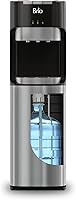
The Brio model below shows how the layout works in practice. The cabinet takes a 3 or 5-gallon bottle, so you can use a smaller jug if a full one is too heavy to manage.
Three temperature settings give you hot, room and cold water, and a two-step child lock guards the hot tap. An empty-bottle alert tells you when to swap the jug.
One trade-off: a bottom loader is taller and deeper than a top loader, because the cabinet has to house the bottle plus the pump and tanks. Check the footprint and the door swing before you commit.
The pump also adds a component that top loaders do not have, though it is what makes the no-lift design possible.
Cleaning reaches the reservoir and taps as usual, but the cabinet and pump area need attention too. Our walkthrough on how to clean a bottom load water cooler covers the steps.
Rule: choose a bottom loader when lifting a full jug is hard or unsafe, and you can spare the extra floor depth for the cabinet.
How Does a Bottleless Water Cooler Work?
A bottleless water cooler connects to your home water line and filters the water on the way in, so you never buy or store a jug. A 1/4-inch line feeds the unit, water passes through a filter stack, and the dispenser serves hot, cold or room-temperature water on demand.
This type removes the jug entirely. There is no bottle to lift, store or sanitize, and no empty jug to return.
The supply is limited only by your plumbing, so you can fill cup after cup without watching a level drop.
The iSpring model here uses a 4-stage filter that it says removes sediment, chlorine, odor and lead. It connects to an existing 1/4-inch water line and includes hot, cold and room settings plus a UV self-clean cycle.
A child lock guards the hot tap.
The trade-offs are real. You need a water line near the unit, and installation takes a little more work than dropping in a bottle.
Filters are a consumable you replace on a schedule, so the running cost shifts from bottled water to filter cartridges. The internal filter stack also means more parts to maintain.
Some bottleless units include UV self-cleaning, which helps with internal hygiene between deep cleans. That does not replace regular wiping and flushing, but it lowers the upkeep load.
Rule: pick a bottleless cooler when a water line reaches the spot you want, and you would rather change filters than carry and store jugs.
Which Water Cooler Type Fits Your Space?
Floor space decides more than any other factor. Each type needs a different footprint and a different amount of clearance, so measure before you compare models.
A top loader needs its cabinet base plus open headroom for the bottle. The unit height plus the jug height sets your minimum ceiling clearance.
If you want it under a counter overhang or a wall shelf, that gap matters.
A bottom loader needs a taller, deeper cabinet but no headroom above the top. It also needs room in front for the door to open so you can slide the jug in.
That front clearance is easy to forget.
A bottleless unit needs the cabinet base plus access to the water line. Route the line before you place the unit, or you will be moving it again.
Some models mount the filter inside the cabinet, so the footprint stays compact.
Height, width and depth all matter. So does the weight of a full jug: a top loader carries that weight on top of the cabinet, while a bottom loader keeps it near the floor.
Measure the doorway on the delivery route as well. A cooler is a bulky box, and a tight stair or hall can stop it before it reaches the kitchen.
Rule: sketch the cooler's outline on the floor and mark the door swing and bottle headroom separately, then compare only models that fit that outline.
How Much Lifting Does Each Type Require?
Lifting is the clearest difference between these types of water coolers. A top loader asks you to hoist a full jug overhead, a bottom loader keeps the jug at floor level, and a bottleless unit removes the jug entirely.
A full 5-gallon bottle weighs about 40 pounds. Lifting that above shoulder height and turning it over is the hardest part of owning a top loader.
If anyone in the household has back, shoulder or grip limits, that lift is a daily risk.
A bottom loader still involves handling a full bottle, but at ground level. You slide it into the cabinet rather than lifting it.
That is a smaller strain and easier to manage alone. Some buyers keep a smaller 3-gallon jug in a bottom loader for an even lighter load.
A bottleless unit has no jug at all. You connect a line and the machine draws water as needed.
The only lifting is changing a filter cartridge now and then.
If you use reusable bottles, the lift question stays relevant for jug-based models. Our guide to the reusable 5 gallon water jug covers options that hold up to repeated refills.
Rule: if lifting a full jug is a strain for anyone who will use the cooler, skip top load and choose bottom load or bottleless.
What Does Each Type Cost to Run?
Running cost splits into water, filters and electricity, and each type shifts the balance. Bottled water is the biggest variable for jug-based coolers.
A jug cooler runs on bottled water. You buy or refill 3 or 5-gallon jugs, then pay for the electricity that heats and cools the tanks.
Reusable jugs cut the cost of buying new water each time. Delivery services add a fee per jug, but save you the trip.
A bottleless unit runs on tap water plus filter cartridges. There is no jug purchase or delivery, but you replace filters on a schedule.
The maker states replacement intervals in the manual, and the cost depends on your water quality and use. Electricity is similar to a jug cooler, since the hot and cold tanks work the same way.
Both types use a compressor or thermoelectric system to chill water, and a heating element for the hot tap. Power draw depends on the model and how much hot water you use.
A cooler that sits idle still keeps tanks at temperature.
Buying a reusable jug pays back over time if you refill locally. Our reusable 5 gallon water jug guide explains what to look for in a bottle that survives repeated trips.
Rule: compare the cost of bottled water or delivery against the cost of replacement filters for your water quality, then pick the type with the lower long-run cost for your household.
Which Type Is Easiest to Clean?
Cleaning effort depends on how many water-contact parts the cooler has. Bottleless units have the most filters but no jug, while jug coolers have a bottle and collar to sanitize.
A jug cooler needs its reservoir flushed and its taps wiped on a schedule. The bottle collar and the outside of the jug also need cleaning.
If the jug is refilled at a store, the jug itself stays in rotation and needs periodic washing.
A bottom loader adds the cabinet and pump area to the routine. Water sits in the reservoir the same way, so the tank and taps still need flushing.
Our bottom load cleaning walkthrough covers the extra steps.
A bottleless unit skips the jug entirely but adds a filter stack. You replace cartridges on the maker's schedule, and some models run a UV self-clean cycle between deep cleans.
That reduces, but does not remove, the need to wipe taps and flush tanks.
Whichever type you pick, set a cleaning reminder. Our guide to how often should water coolers be cleaned gives a schedule you can follow for each design.
Rule: if you want the least frequent cleaning, a bottleless unit with UV self-clean wins; if you already own a jug cooler, plan a cleaning date and stick to it.
Which Water Cooler Type Should You Pick?
The type to pick depends on who lifts the jug, whether a water line reaches your spot, and how much floor space you have. There is no single best type for every home.
For most households, a bottom load cooler is the best pick. It removes the overhead lift without needing plumbing, and it works with standard 3 or 5-gallon jugs, including reusable ones.
The Brio model covers hot, room and cold water with a child lock and an empty-bottle alert. You still buy or refill water, but the hardest part of the routine goes away.
Choose a top load cooler when headroom is open and someone can lift a full jug safely. The Frigidaire model is slim and simple, with hot and cold taps and a child lock.
It is the least complex design and usually the easiest to move.
Choose a bottleless cooler when a 1/4-inch water line reaches the spot you want. The iSpring model filters tap water through four stages and adds UV self-cleaning.
You trade jug handling for filter changes and a bit more installation work.
To weigh features beyond type, read our full guide on how to choose a water cooler. It covers capacity, temperature settings, safety locks and placement.
Before you buy, measure the footprint and the clearance, confirm who will handle the water, and decide whether you want to keep buying jugs. Then match the type to those answers.
Rule: pick bottom load for no-lift jug water, top load for the simplest budget setup, and bottleless for filtered tap water without jugs.
Frequently asked questions
Do bottleless water coolers need plumbing?
Yes, a bottleless dispenser connects to a water line, usually a 1/4-inch line. You need a nearby supply and a spot to mount or route the line.
In return, you get unlimited filtered water without jug storage.
How much space does a water cooler need?
A freestanding cooler needs its cabinet footprint plus a little clearance to open the door or lift a jug. Top loaders also need open headroom above the unit to seat the bottle, so measure both the floor space and the height.
Which water cooler type is easiest to keep clean?
Bottleless models are often the easiest, because some include UV self-cleaning and there is no jug to sanitize. Any cooler still needs regular cleaning, so plan for wiping the taps and flushing the tank on a schedule.
Can a top load cooler use a reusable jug?
Yes, most top loaders accept standard 3 or 5-gallon jugs, including reusable ones. That lets you keep refilling the same bottle instead of buying new water each time.